NUS agentic AI research use case

Research Brain

A provenance-preserving information infrastructure for shared and automated research.

Research Brain is an agentic AI infrastructure that helps researchers and scientific agents reuse knowledge from papers, code, experiments, and previous projects. It continuously collects research material, preserves the original evidence, and organizes claims, methods, protocols, negative results, and group experience as shared research memory. Scientific agents can then answer questions, compare methods, check novelty, and run validated tools with traceable evidence and human approval. The goal is to make computer systems research, and later other research disciplines, faster, more reproducible, and easier to hand over across people and projects.

Gao Bin · School of Computing, NUS
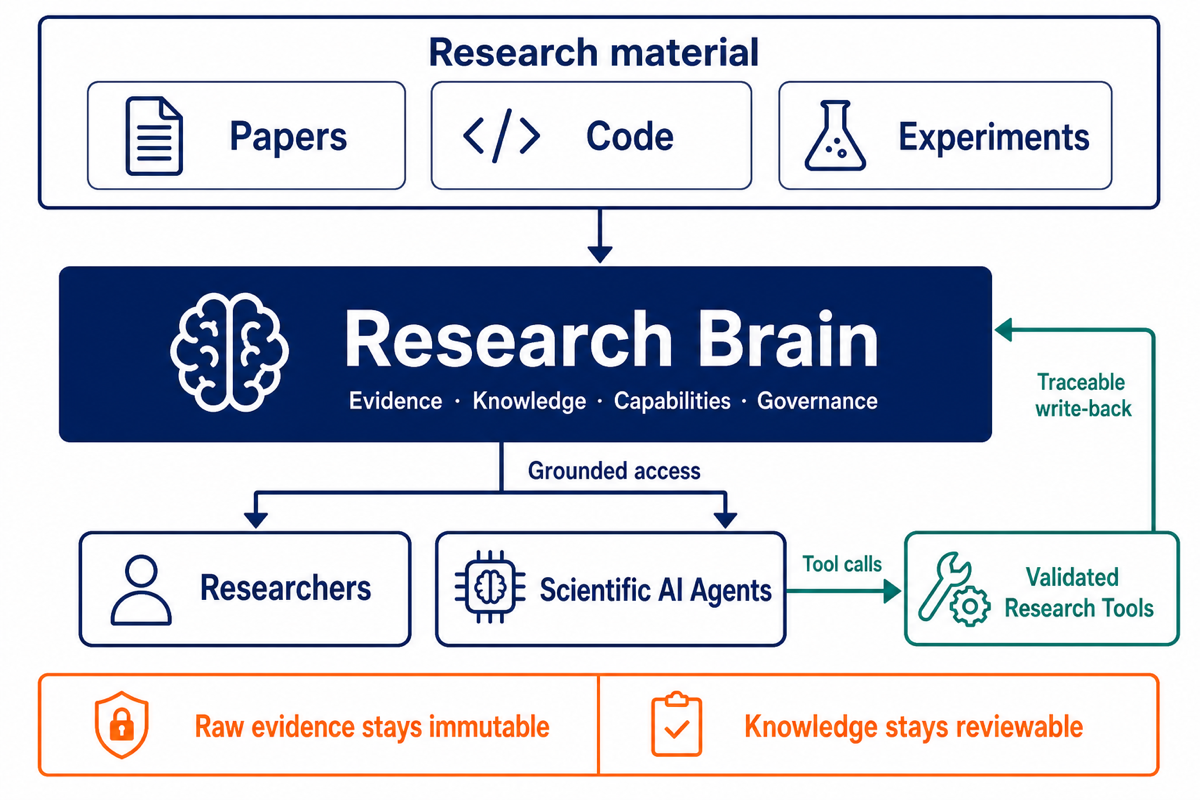
Research material from papers, code, and experiments flows into Research Brain, which provides grounded access to researchers and scientific AI agents. Scientific AI agents call validated research tools, and traceable results are written back to Research Brain. Raw evidence remains immutable while knowledge remains reviewable.
Reliable research substrate

Scientific agents need a reliable research substrate, not just a stronger model.
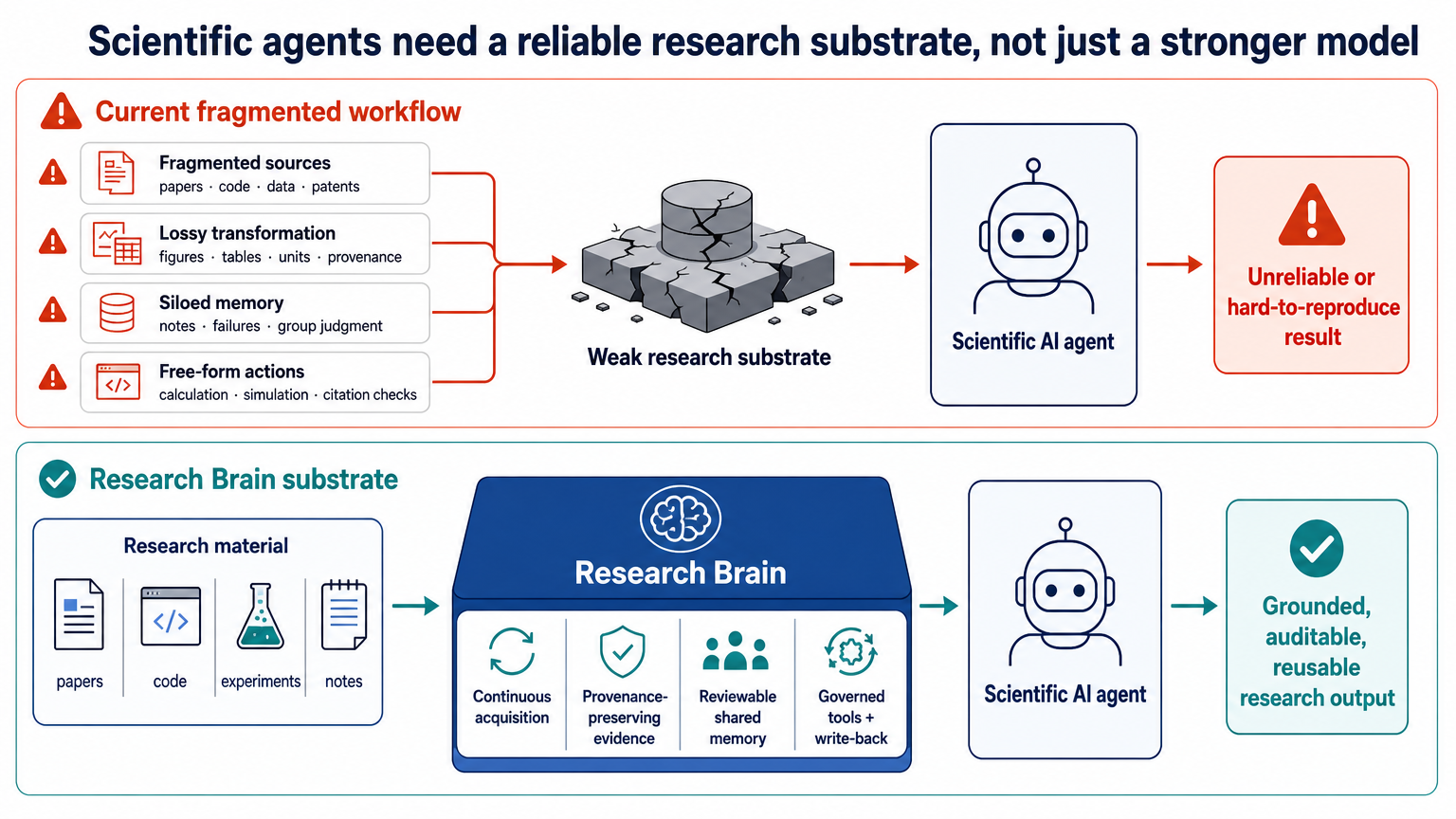
A two-lane comparison diagram. The current fragmented workflow has fragmented sources, lossy transformation, siloed memory, and free-form actions flowing into a weak research substrate, then a scientific AI agent, then an unreliable or hard-to-reproduce result. The Research Brain substrate lane turns research material into continuous acquisition, provenance-preserving evidence, reviewable shared memory, and governed tools with write-back, producing grounded, auditable, reusable research output.
Tap or click the diagram to inspect it at full size.
From material to research memory

Prepare research information once. Keep its meaning and provenance intact.

This preparation layer converts discovered material into reusable evidence and maintainable domain knowledge, so later agents do not repeatedly parse the same corpus.
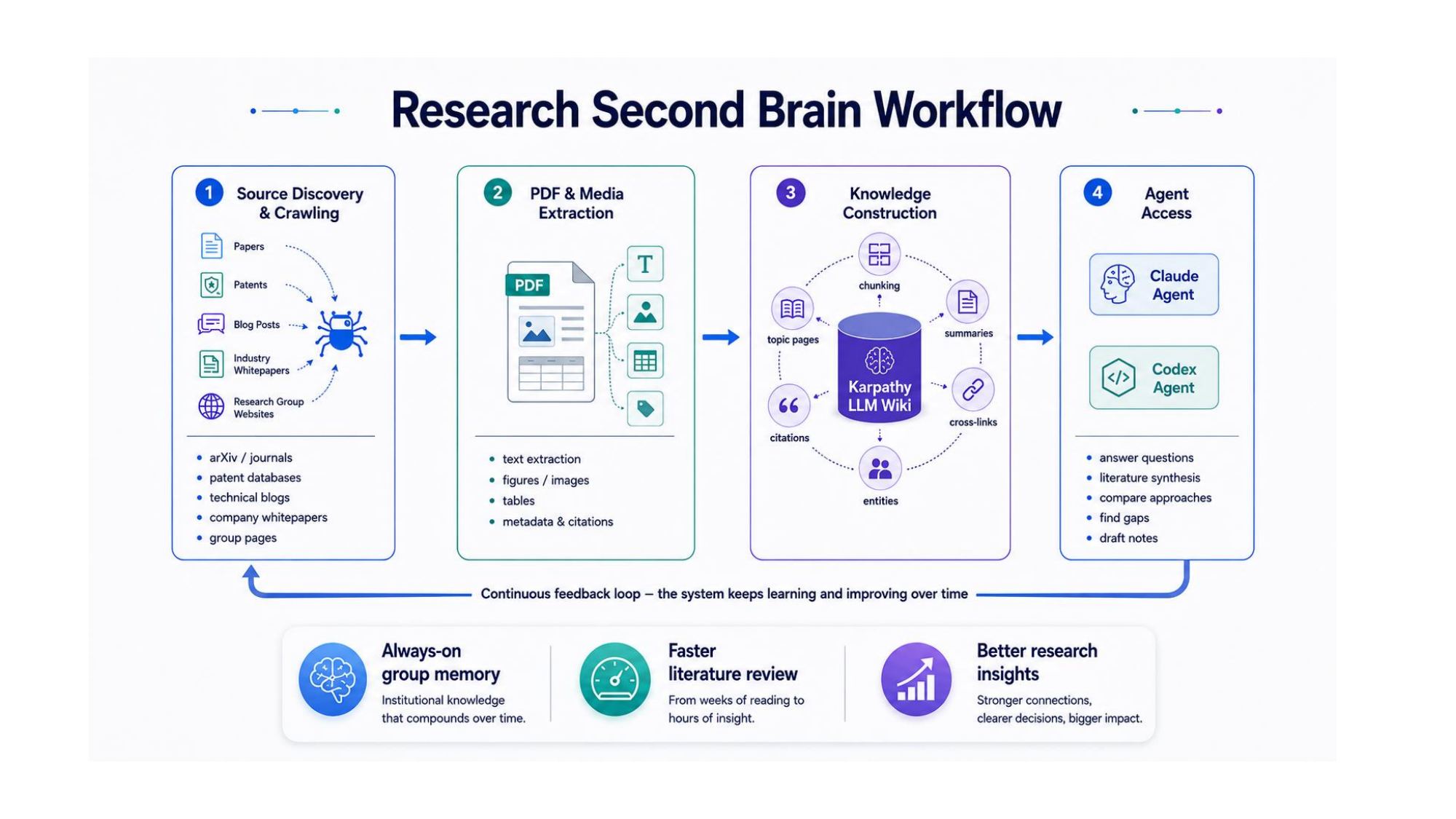
Prototype Research Brain workflow. Research sources are discovered and crawled, PDFs and media are extracted, knowledge is constructed in a linked research wiki, and agents access the resulting knowledge for question answering, literature synthesis, comparison, gap finding, and note drafting. Results feed back into continuous discovery.
Prototype workflow from the current implementation; tap or click to inspect it at full size.
Building a scientific AI agent

One stable architecture, configured for different research domains.

Computer systems and fluorophore molecular research use the same Research Brain structure; only their domain evidence, knowledge, skills, and validated tools change.
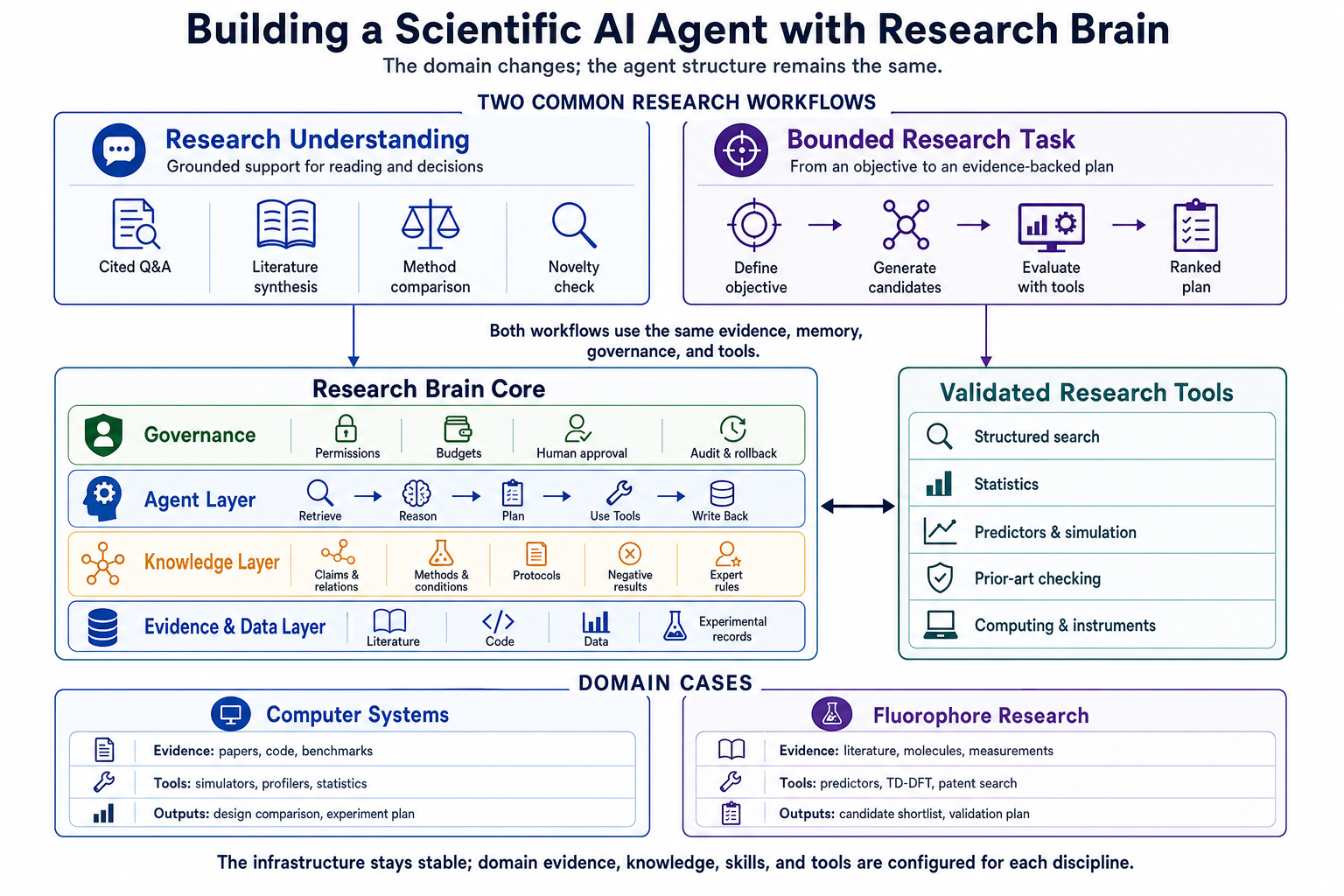
A general scientific AI agent architecture built with Research Brain. Research understanding and bounded research workflows use a shared core containing governance, agent, knowledge, and evidence layers connected to validated research tools. Computer systems and fluorophore research are shown as two domain cases configured on the same infrastructure.
Tap or click the architecture to inspect it at full size.
Institutional deployment

One institutional Research Brain, serving multiple research groups and AI services

Public research material is prepared once and reused. Private data and active work remain isolated in authorized group workspaces.
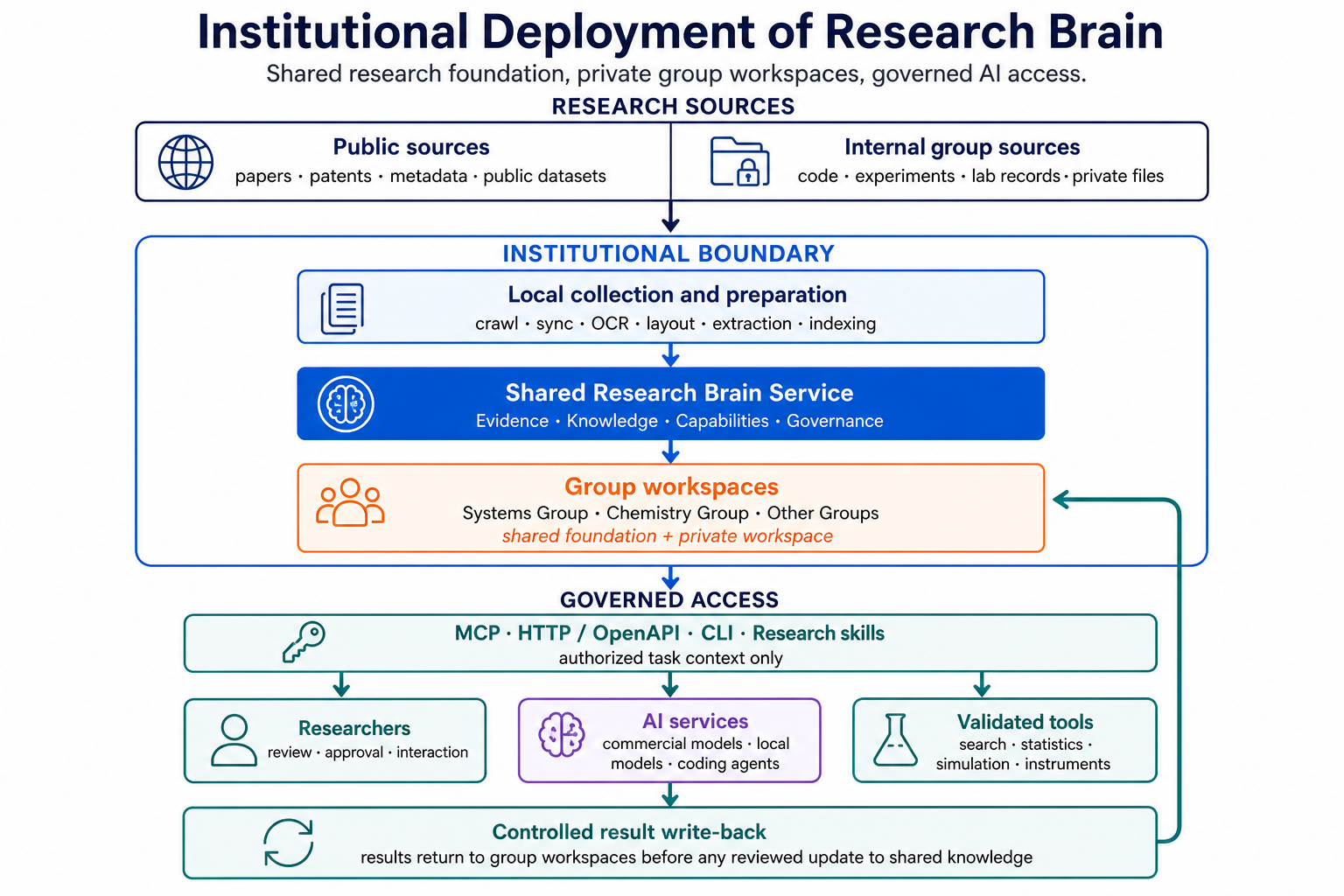
Institutional deployment of Research Brain. Public and internal sources flow into local collection and preparation inside the institutional boundary. A shared Research Brain service feeds group workspaces, which are accessed through governed interfaces by researchers, AI services, and validated tools. Results are written back to group workspaces before reviewed updates to shared knowledge.
Tap or click the deployment diagram to inspect it at full size.